Too many software teams commit before reality enters the room.

By the time users touch the future system, budgets are approved, teams are assigned, and scope has hardened around assumptions.

RDD uses AI-assisted candidate reality to expose disagreement, missing rules, and delivery risk while change is still cheap.

When reality becomes cheap, learning should move before commitment.
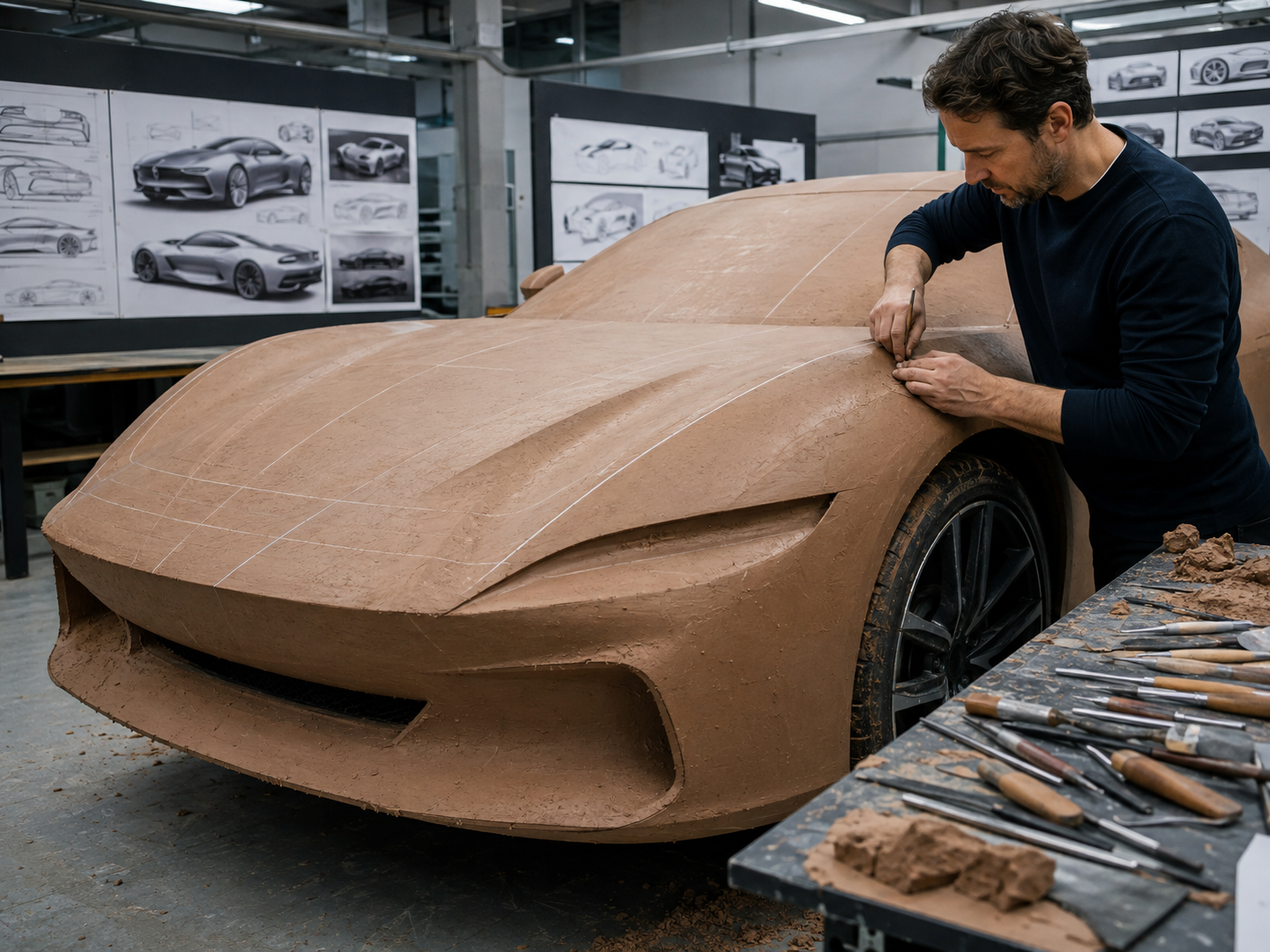
A clay automotive model shaped before production.
Clay before
production.
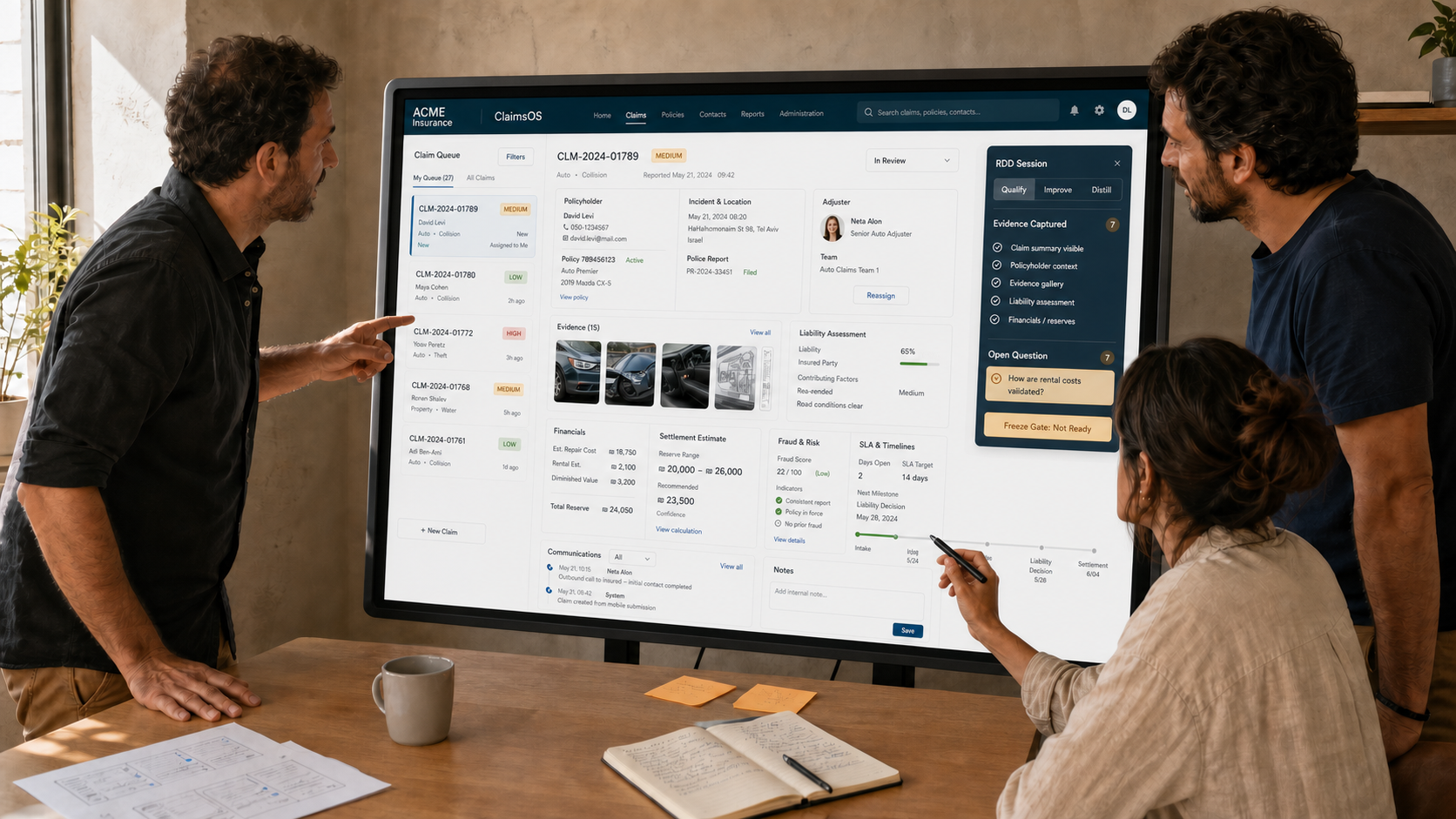
A claims management product preview used as candidate reality before commitment.
Candidate reality
before commitment.

The shift that changes everything

Reality moved
from the end
of the process
to the beginning.

The old model was rational when software was expensive to experience. RDD keeps the discipline, but moves learning into something stakeholders can use, question, and correct before engineering commitment.

The old world:
describe, then build

Commit first. Teams converted uncertainty into documents, estimates, and funding decisions before anyone could operate the thing itself.

  1. Think
  2. Describe
  3. Describe
    better
  4. Agree
  5. Estimate
  6. Fund
  7. Build
  8. Experience
    First contact
  9. Learn
  1. Intent
  2. Describe
  3. Commit
  4. Build
  5. First contact with reality

Reality arrives after commitment.

The team commits before anyone operates the future.

Reality is late. Changes are expensive.
RDD:
discover in reality,
then commit

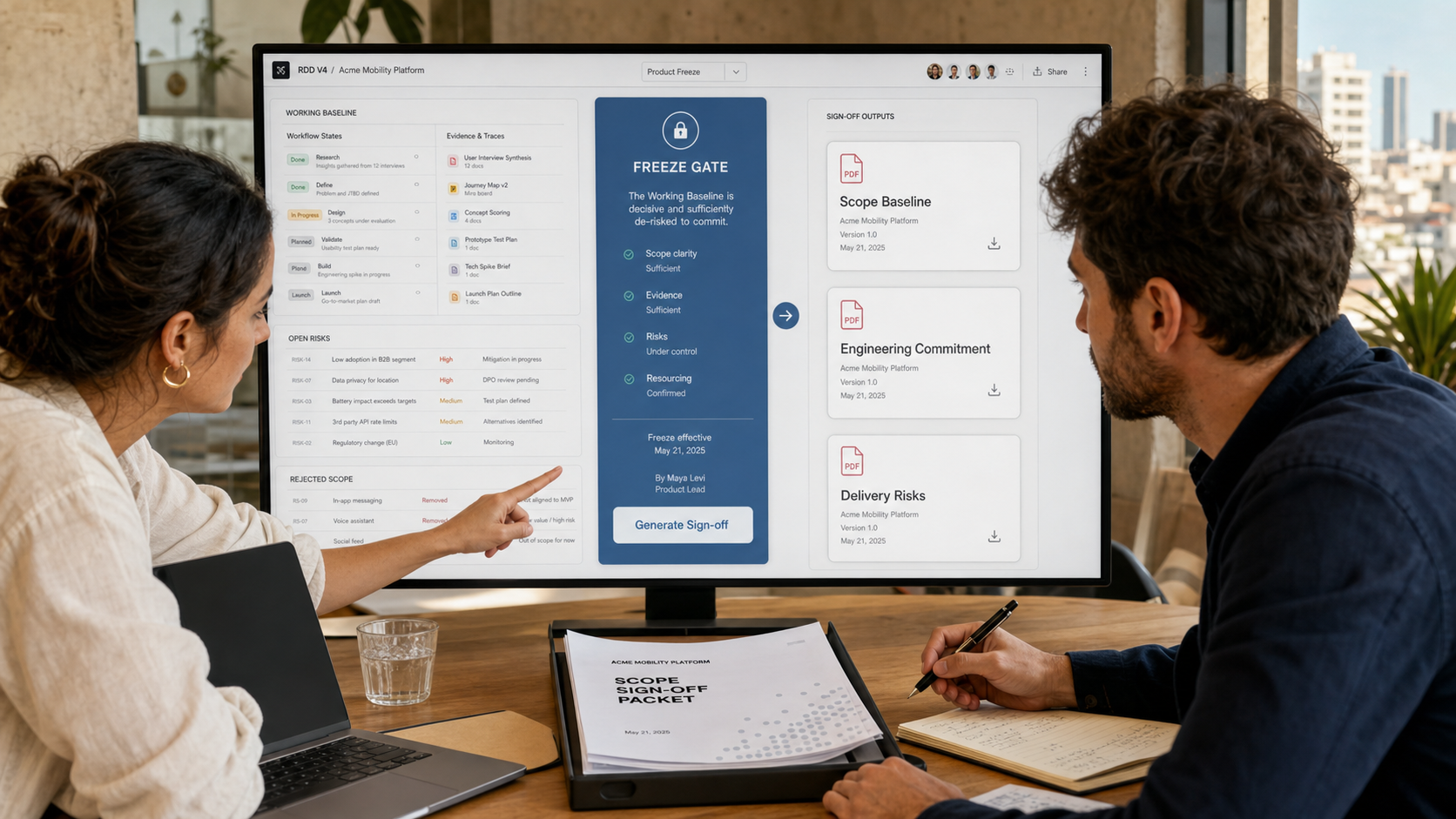
Experience first. Teams build a candidate reality, let people use it, capture evidence, then freeze only what has survived contact.

  1. Think
  2. Materialize
  3. Experience
    First contact
  4. Learn
  5. Change
  6. Experience
    again
  7. Decide
  8. Freeze
    Gate
  9. Engineer
  10. Validate
  11. Operate
  1. Intent
  2. Materialize
  3. First contact with reality
  4. Revise
  5. Freeze
  6. Engineer

Reality arrives before commitment.

The team operates a candidate reality before it freezes scope.

Reality is early. Learning is cheap. Commitment is confident.

Disagreement did not disappear. It moved to where it is cheaper to resolve.

A day inside a reality loop

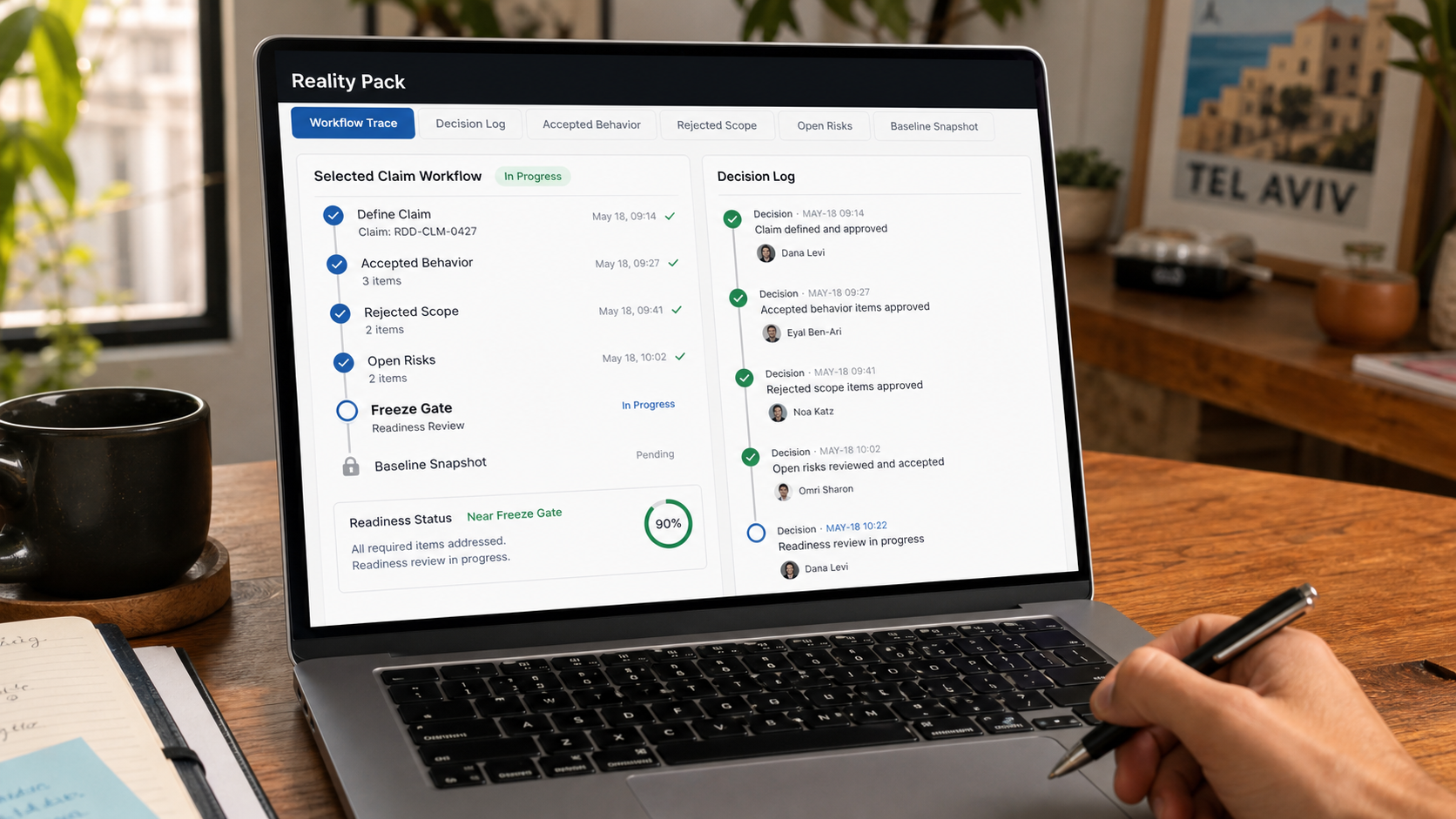
CRM approval flow example

  1. Stakeholder alignmentDefine the approval flow hypothesis.
  2. Build candidate realitySpin up a working CRM flow.
  3. First contact with realityWalk the candidate with real users.
  4. Learn and adjustCapture insights and iterate.
  5. Decision or next loopCommit, pivot, or loop again.
One day. Real users. Real insights. More learning than weeks of documents.

RDD evidence protocol

Reality Loops produce
a decision record

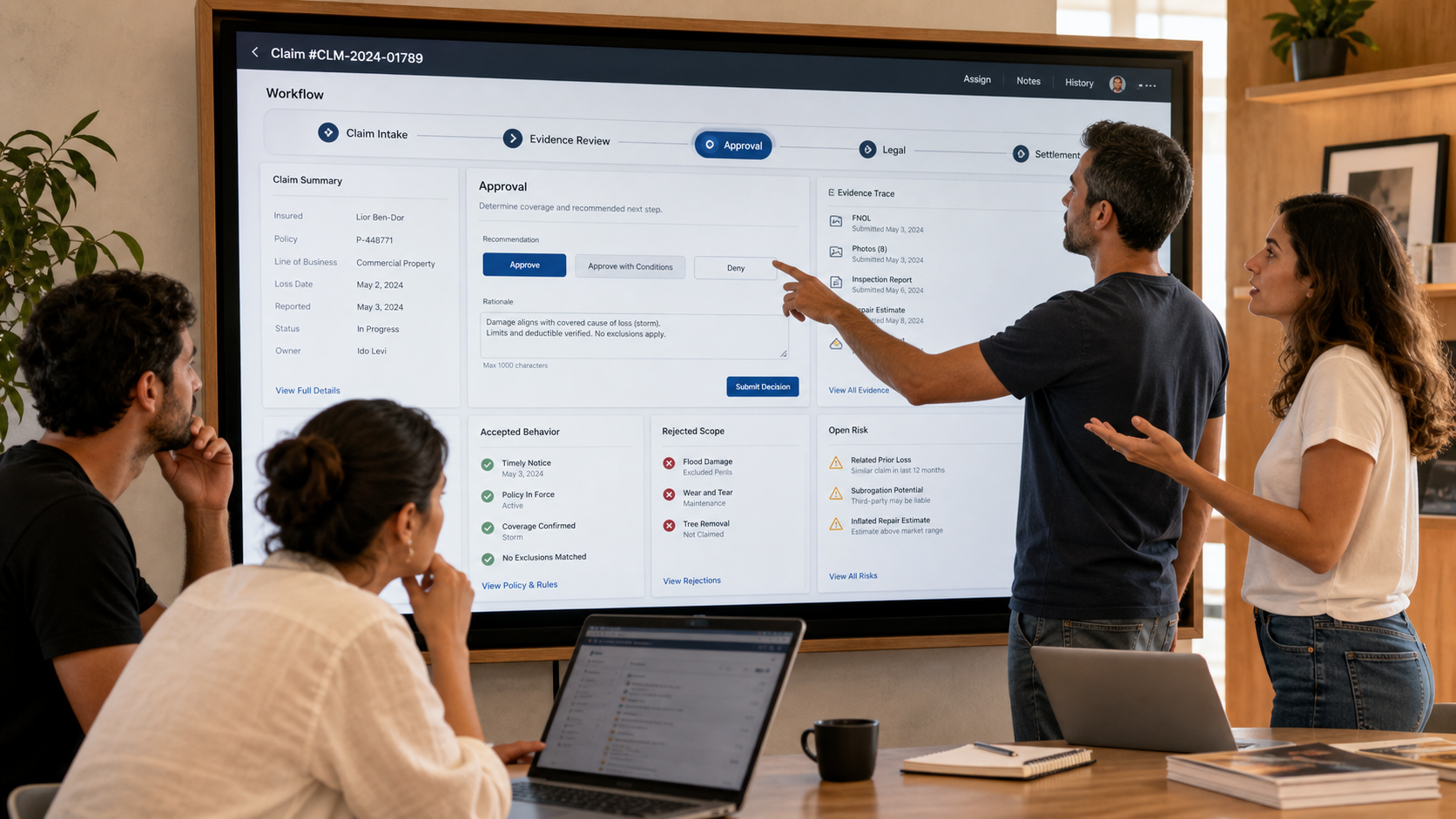
Not vibe coding. A governed experiment record. Each loop has a stated uncertainty, a testable candidate, named participants, observations, evidence, and a decision carried forward.

Loop record Accepted behavior Rejected scope Open risk
SessionCRM Approval Flow
Loop03
StatusEvidence carried forward
DateMay 14
Uncertainty

Can adjusters approve covered storm damage without manual support?

Observed behavior

Users understood the approval path but interpreted temporary credit as final settlement.

Decision

Revise credit language. Remove one tree-removal exception. Carry fraud flag to the next loop.

Accepted behavior Rejected scope Open risk Ready for freeze review
Product Claims Ops Engineering

Proven across industries

Established disciplines already use tangible evidence before expensive commitment.

Automotive clay model.
Exhibit AAutomotiveClay models expose proportion, stance, and surface decisions before engineering teams commit to tooling and production.Tactile evidence before capital commitment.
Fashion drape before production.
Exhibit BFashionDraping lets designers test fit, weight, and motion before patterns and production lock the idea down.Embodied evidence before repeatable manufacture.
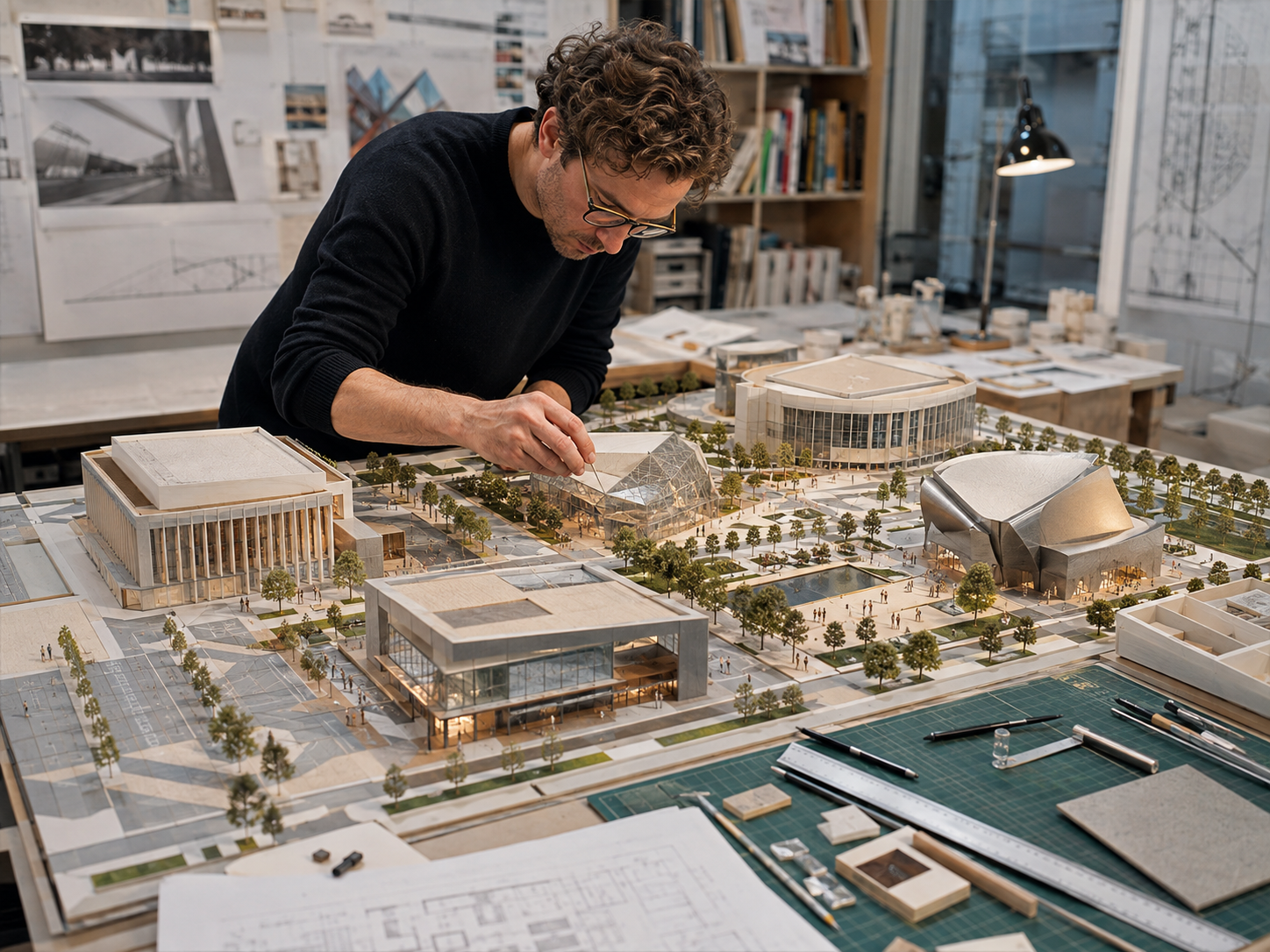
Architectural model before construction.
Exhibit CArchitectureModels make circulation, massing, and spatial tradeoffs visible before cost and construction become hard to reverse.Spatial evidence before irreversible work.

Built for complex software decisions

For leaders who need better scope before delivery hardens.

Reality Driven Development is for organizations where unclear intent becomes delivery risk: enterprise software, legacy modernization, AI-enabled workflows, regulated operations, and client-service commitments.

CIOs and CTOsReduce late discovery, governance friction, and delivery risk.
Enterprise architectsReceive clearer boundaries, assumptions, and Reality Check queues before architecture hardens.
Product and delivery leadersTurn stakeholder disagreement into evidence before teams commit capacity.
AI transformation leadersUse AI-assisted software creation without confusing fast learning with production readiness.
Software-services executivesProtect scope, pricing, trust, and delivery commitments with experienced evidence.

Direct answers

The short version for evaluators and answer engines.

What is Reality Driven Development?

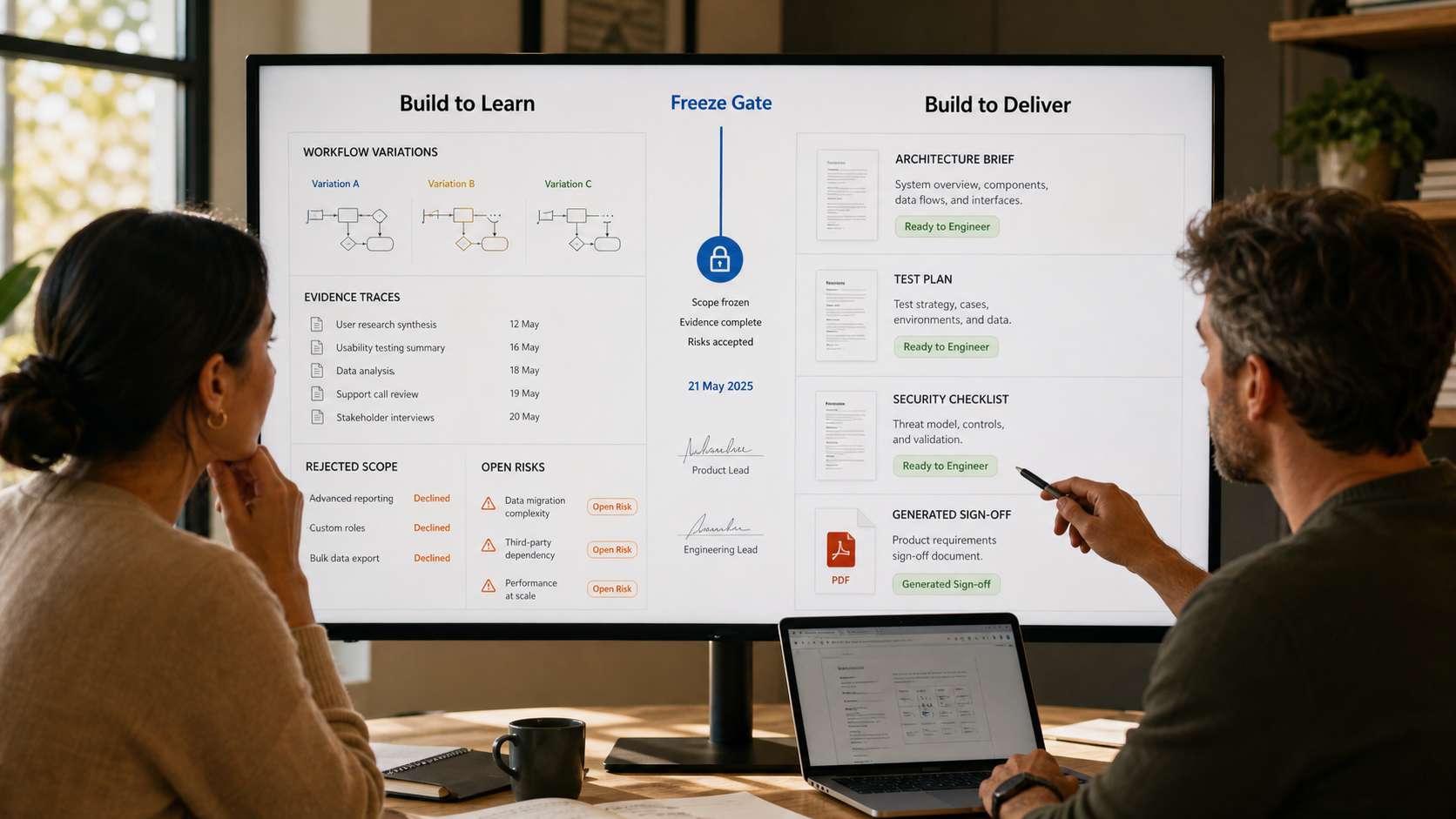
Reality Driven Development is a software operating model for the AI era. It helps teams learn from candidate reality before engineering commitment by separating Build to Learn from Build to Deliver.

Who is RDD for?

RDD is for CTOs, CIOs, enterprise architects, product leaders, delivery leaders, AI transformation leaders, and software-services executives working on complex software initiatives.

How is RDD different from prototyping?

RDD uses working candidate reality to expose scope, behavioral disagreement, and delivery risk. Its evidence is carried through a delivery baseline and challenged by Reality Checks before production engineering.

Problem-aware entry points

Start with the risk your team can already feel.

Most leaders do not search for a new methodology first. They search for the delivery problem sitting in front of them.

Join the early Reality Driven community.

Receive the RDD Manifesto, doctrine updates, playbook previews, and workshop announcements.

For teams with an active uncertainty, the first Reality Loop remains the higher-intent next step.